
This is the second in my short series looking at how data, technology and business thinking have made some of the things we love slicker… but maybe less human. In part one, I looked at the Premier League and asked whether the pursuit of control had squeezed out the unpredictability that made football so compelling.
Now, I’m turning to motoring and motorbikes – two passions of mine that have been shaped, for better and worse, by the same forces. This isn’t about horsepower or crash test scores. It’s about the feeling you get behind the wheel or in the saddle – and how technology sometimes adds to it, but just as often gets in the way.
When a car was yours, not theirs
I drive a 2017 Mini Cooper and I love it. It doesn’t have a touchscreen – it has proper switches. It doesn’t nag me with lane-keeping assistance. What it does have is a set of options I chose carefully at the time: leather seats, adaptive suspension, LED headlights, parking sensors, an upgraded ‘media pack’ and satellite navigation. Back then, these choices felt like a personal touch – a way to make the car ‘mine’.
In a way, I future-proofed it. Many of those features are standard on new Minis now, but the car I’ve got still feels like it belongs to me rather than to BMW’s latest software update. Newer models might have more tech, but not all of it is for my benefit. I absolutely understand that safety is a priority, but too often, it feels like the driver is a beta-tester for systems designed to please an algorithm, not the person holding the wheel.
Riding with the safety net – and without it
Back in 2017, I bought a BMW S1000 XR motorbike. It had everything: electronic suspension, riding modes, traction control, ABS, the works. It went like a rocket and could do anything you asked. But here’s the thing – I realised I didn’t want or need all of that technology. It wasn’t (too) unreliable because of the tech, but it was definitely a reminder that all the gadgets in the world don’t guarantee the right riding experience for you.
So then I went the other way. In 2022 I bought a 2016 Honda Fireblade – the last model year before electronic rider aids (other than ABS) became standard. This was riding stripped back to its essentials. As an advanced motorcycle tutor with RoSPA, I valued the skill and discipline of riding well. I didn’t need a computer to save me; I wanted to be responsible for my own ride.
Slowing down to feel more
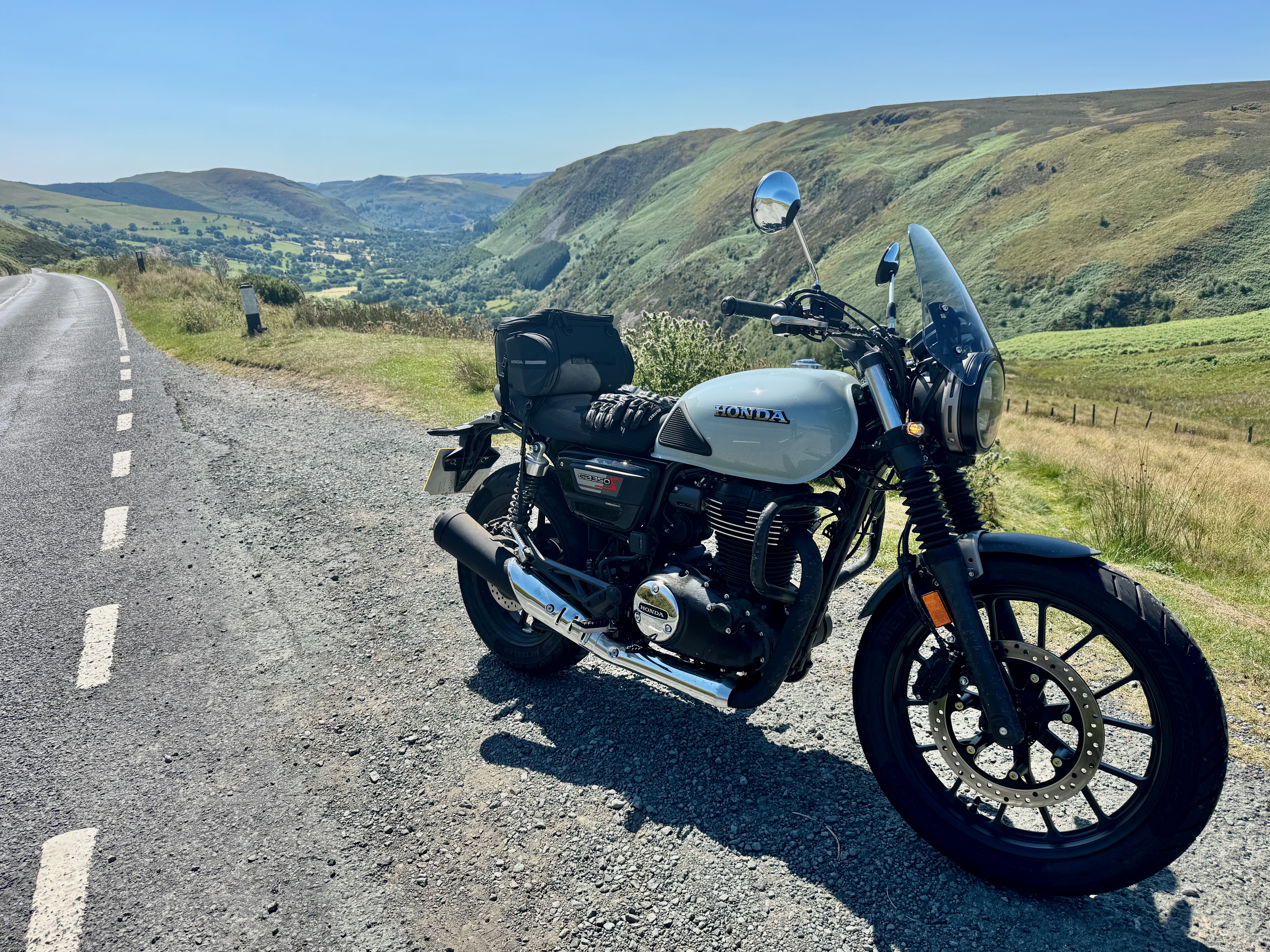
For me, motorbikes are about experience. Each one should be different. Now I’m on a Honda GB350 S, which I just bought a few weeks ago. It’s light, simple, and slower than anything I’ve owned for years – and that’s exactly why I love it. It’s an involving ride that requires attention and commitment. You can’t just point and twist the throttle. You work with it, listen to it, build momentum (aka ‘gentle acceleration’) and enjoy the charm that comes from its simplicity.
The lower league football parallel
This is where the football comparison that I made in my first article (link to https://www.fedoraconsultancy.co.uk/perfectly-predictable-the-slow-death-of-drama-in-the-english-premier-league/) comes back. Just as lower-league football still carries the unpredictability that the Premier League has tidied away, older or simpler cars and bikes often feel more authentic than their modern, tech-heavy equivalents.
At the top end, everything is engineered for efficiency, comfort and safety. Understandably so. But in the process, the unpredictability – the thing that makes your heart beat faster – is often designed out.
The trade-off we don’t talk about
Cars and bikes today are safer, faster, more reliable and more efficient than ever. That’s the upside. The downside is that, in the pursuit of control, a lot of the unpredictability and personality has been ironed out.
We’ve moved from driving and riding as a craft to driving and riding as a managed process. Systems monitor, intervene and optimise – but sometimes, they take the very thing we enjoyed away.
Just like football, the game is still recognisable, but the feeling has changed.
Next time, I’ll turn to vinyl records. Because music, too, has a lot to teach us about why imperfections, quirks and surface noise can be more powerful than digital polish.